
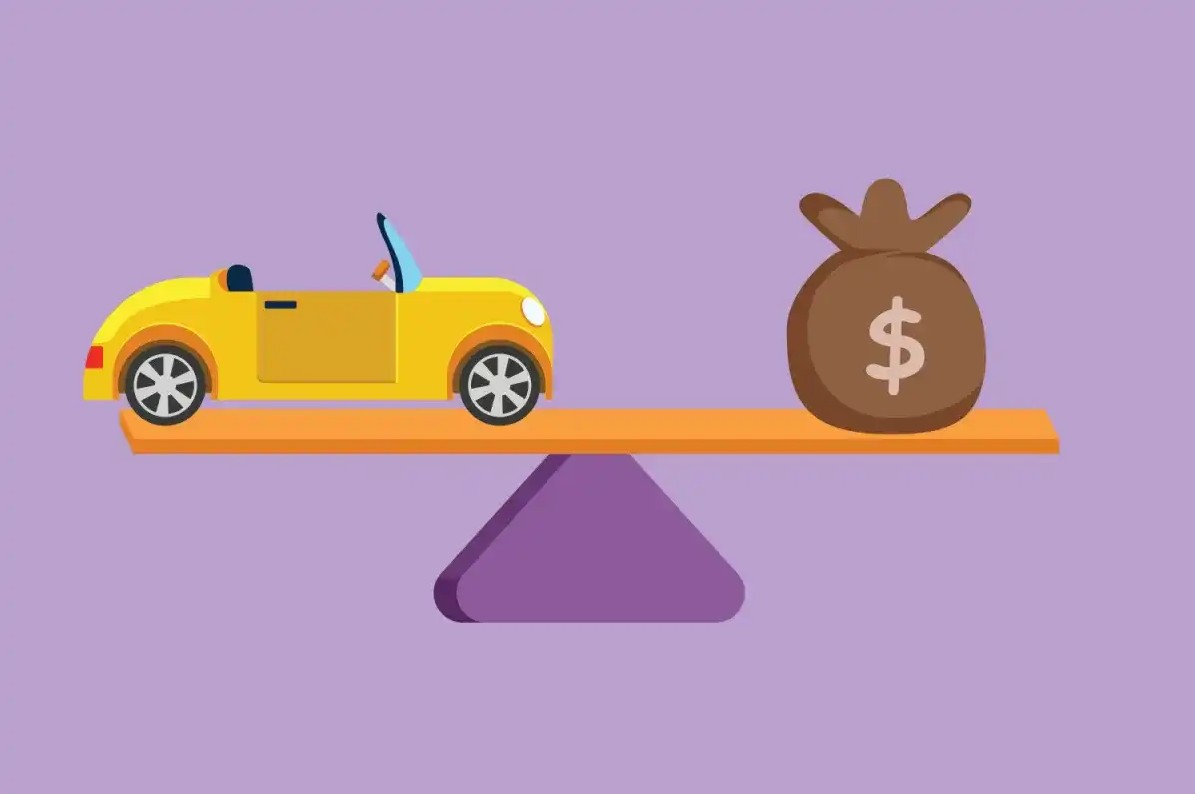
An auto equity loan is a secured loan that lets you borrow money using the equity in your vehicle as collateral. In plain terms, equity is the portion of the car’s value that you actually own the market value minus any outstanding loan balance. With an auto equity loan you pledge that equity (or in some cases the full title) to a lender in exchange for cash, often at a lower interest rate than an unsecured personal loan because the loan is secured by your vehicle.
How an Auto Equity Loan Works
- Calculate your vehicle equity.
Estimate your car’s current market value (using Kelley Blue Book, CarDekho, or comparable guides) and subtract what you still owe on any existing auto loan. The remaining figure is your equity. If this number is positive, you likely have some equity to borrow against. - Apply with a lender.
Banks, credit unions, and specialty lenders (and some fintech providers) offer auto equity loans. Lenders will check the car’s condition, your credit, income, and the loan-to-value (LTV) they’re willing to accept. Expect to provide ID, proof of income, registration, and insurance documents. - Loan amount and terms.
Lenders usually offer a percentage of your car’s equity — the exact amount varies by lender. Terms can range from short (a few months) to several years; interest rates are often lower than unsecured personal loans because the loan is secured. - Vehicle remains usable (usually).
Unlike some title-loan products where the lender holds your title or physically takes your car, many auto equity loans allow you to keep driving the vehicle as long as you continue repayments and insurance requirements are met. That said, failure to pay can lead to repossession.
Auto Equity Loan vs. Similar Products
- Auto equity loan vs. title loan: A title loan often requires you to own the vehicle outright and hands the title to the lender as collateral; title loans are usually short-term with very high APRs and steep repossession risk. An auto equity loan can sometimes be obtained even if you still owe on the car, and tends to offer more borrower-friendly terms. Still, both use the car as collateral.
- Auto equity loan vs. unsecured personal loan: Unsecured loans do not use collateral and typically carry higher interest rates for borrowers with similar credit. If you have equity in your vehicle, an auto equity loan can offer a lower APR because the lender has the added security of collateral.
Read More : Samsung A17 Review & Overview: A Value 5G All-Rounder
Who should consider an auto equity loan?
An auto equity loan can make sense when you need cash for medium-term expenses and either: (a) you want a lower interest rate than an unsecured loan, or (b) you have limited credit history but enough vehicle equity to qualify. Common use cases include debt consolidation (when total interest savings make sense), urgent medical bills, home repairs that increase long-term stability, or financing an education or small business need. That said, remember that using your car as collateral means you risk losing it if repayments fail.
How much can you borrow?
Lenders typically offer a portion of your vehicle’s equity the exact percentage depends on the lender’s policy, the vehicle’s age and condition, your credit score, and local regulations. Some credit unions advertise up to 100–125% of a vehicle’s equity (for example, certain offers let you borrow up to 125% of the car’s equity for specific purposes), while others are more conservative. Always ask the lender for their maximum loan-to-equity ratio and read the fine print.
Interest rates, fees and costs
Interest rates on an auto equity loan vary widely they can be notably lower than those for unsecured personal loans if you have decent credit, but they are influenced by your credit profile, loan term, and vehicle age. For context, consumer auto-loan APRs can range from single digits up to the high-teens or more depending on risk; secured deals backed by collateral often sit on the lower side of that spread. Also watch for origination fees, late fees, and insurance add-ons (some lenders require full coverage while the loan is outstanding). Compare APRs and total cost (including fees) across lenders.
Read More : Tech Giants Envision Future Beyond Smartphones
Key documents and requirements
When applying for an auto equity loan, lenders commonly request:
- Proof of identity (driver’s license or government ID).
- Proof of income (pay stubs, bank statements, or tax returns).
- Current vehicle registration and proof of insurance (many lenders require full-coverage insurance during the loan).
- Vehicle details (VIN, make/model, mileage), and sometimes a vehicle inspection or appraisal.
Pros of an auto equity loan
- Lower interest than unsecured options: Because the loan is secured, lenders often charge lower rates.
- Access to funds with limited credit history: Collateral lowers lender risk, so borrowers with weaker credit may still qualify.
- Flexible use of funds: Most lenders allow you to use proceeds for a variety of personal needs, from debt consolidation to emergency expenses.
Cons and major risks
- Risk of repossession: The most serious downside of an auto equity loan is that default can result in repossession of the vehicle. That loss may be far costlier than the immediate cash need.
- Depreciation risk: Cars depreciate quickly; high depreciation can erode equity faster than you expect, affecting refinance or future borrowing options.
- Fees and trap loans: Watch for high origination fees, prepayment penalties, or “add-on” insurance products that raise the effective cost. Some title-loan style products disguise themselves as convenient credit while charging extremely high APRs.
Smart ways to use an auto equity loan (and when to avoid it)
Use an auto equity loan for:
- Consolidating high-interest credit card debt only if total cost and monthly payments improve.
- Necessary medical or home repairs that would otherwise create more expensive debt.
- One-time investments that have a reasonable ROI or prevent much larger expenses later.
Avoid using an auto equity loan to:
- Fund ongoing consumption or lifestyle inflation (vacations, nonessential shopping) unless you have a clear repayment plan.
- Replace disciplined saving — turning short-term spending into long-term secured debt can be risky.
How to shop and compare offers
- Get multiple quotes. Compare APR, term, fees, and LTV.
- Ask about repossession terms. Understand grace periods, late-payment steps, and collection practices.
- Read the fine print on insurance requirements. Many lenders require full coverage check premium costs.
- Check for prepayment penalties. You don’t want to be barred from paying off early to save interest.
- Use a neutral APR calculator. Compare total finance cost across offers rather than monthly payment only.
Alternatives to an auto equity loan
- Unsecured personal loan: No collateral risk, but possibly higher interest.
- Home equity line of credit (HELOC) / home equity loan: Often better rates but uses your home as collateral much higher stakes.
- Balance transfer or 0% APR credit offers: For consolidation of credit card debt in the short term.
- Borrow from family or peer-to-peer lenders: Potentially lower cost but should be formalized in writing.
- Refinance existing auto loan: If your current car loan has a high rate, refinancing might reduce rate without tapping equity.
Repayment strategy and what to watch for
- Make payments on time. Timely payments protect your car and your credit score.
- Keep insurance current. Lenders often require proof of insurance; lapses may trigger default events.
- Watch your equity position. Reassess the car’s market value occasionally major depreciation could change your borrowing options.
- Don’t borrow the maximum unless you must. Leave a buffer so repayments are manageable if income dips.
Real Example
Suppose your car’s fair market value is ₹8,00,000 (or $10,000 equivalent depending on market), and you owe ₹3,00,000. Your equity is ₹5,00,000. If a lender offers up to 80% of equity, you could potentially borrow ₹4,00,000 (80% × ₹5,00,000). If the APR is competitive versus an unsecured loan, it could be worth it but you must weigh affordability and repossession risk. (This is an illustrative example; actual offers vary.)
Final checklist before you sign
- Have I compared at least three lenders?
- Do I understand the APR, fees, and total payable?
- What happens if I miss one payment? What’s the cure period?
- Does the loan require full-coverage insurance or other mandatory add-ons?
- Can I afford the monthly payment if income drops by 20%?
- Is this financing essential or could I delay and save instead?
If you answered “no” or “not sure” to any of the above, pause and ask the lender for clarification or seek another option. Remember: an auto equity loan provides useful access to credit, but it converts your vehicle into security for repayment. That flexibility comes with responsibility.
Where to learn more / trustworthy places to check rates
Start with reputable consumer finance resources and lender sites for current APR ranges and document lists sites like Experian, LendingTree, Bankrate, SoFi, and credit union pages explain product features and typical requirements. Always verify the lender’s licensing and read customer reviews before committing.






1 thought on “What is Auto Equity Loan : How it Works”